Story of 74% CVR lift in 6 months for a health brand
Ten experiments found that simplifying the page often hurt conversion. The biggest wins came from resolving uncertainty around insurance, cost, and what would happen next.
Read more Talk to us
Articles, experiments and case studies from 99Ways.
Ten experiments found that simplifying the page often hurt conversion. The biggest wins came from resolving uncertainty around insurance, cost, and what would happen next.
Read moreBusiness experimentation is more than choosing a winning page. It reveals which customer problems deserve investment, which ideas should stop, and where to commit resources with evidence.
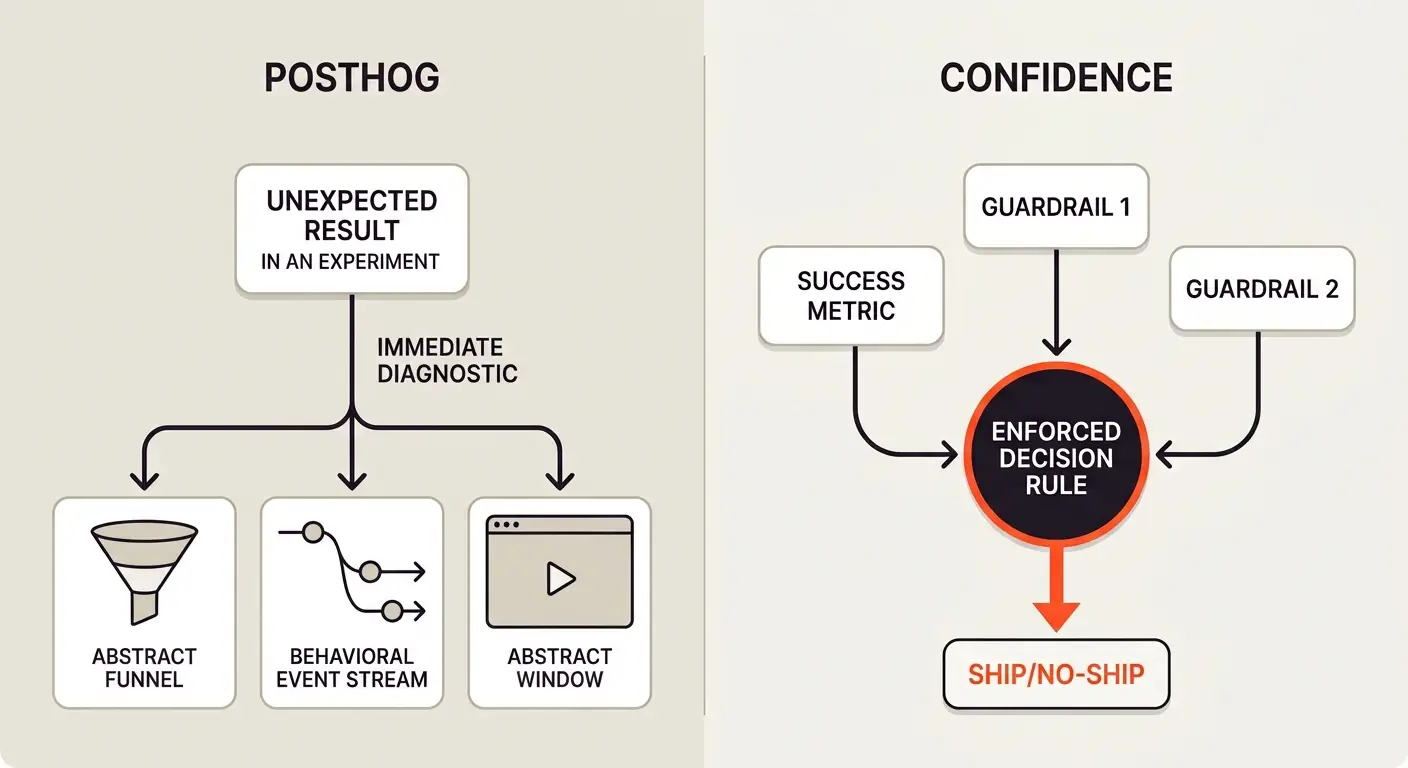
Read moreAn evidence-based Confidence vs PostHog comparison covering data architecture, statistical methods, guardrails, governance, pricing, tradeoffs, and a practical evaluation plan.
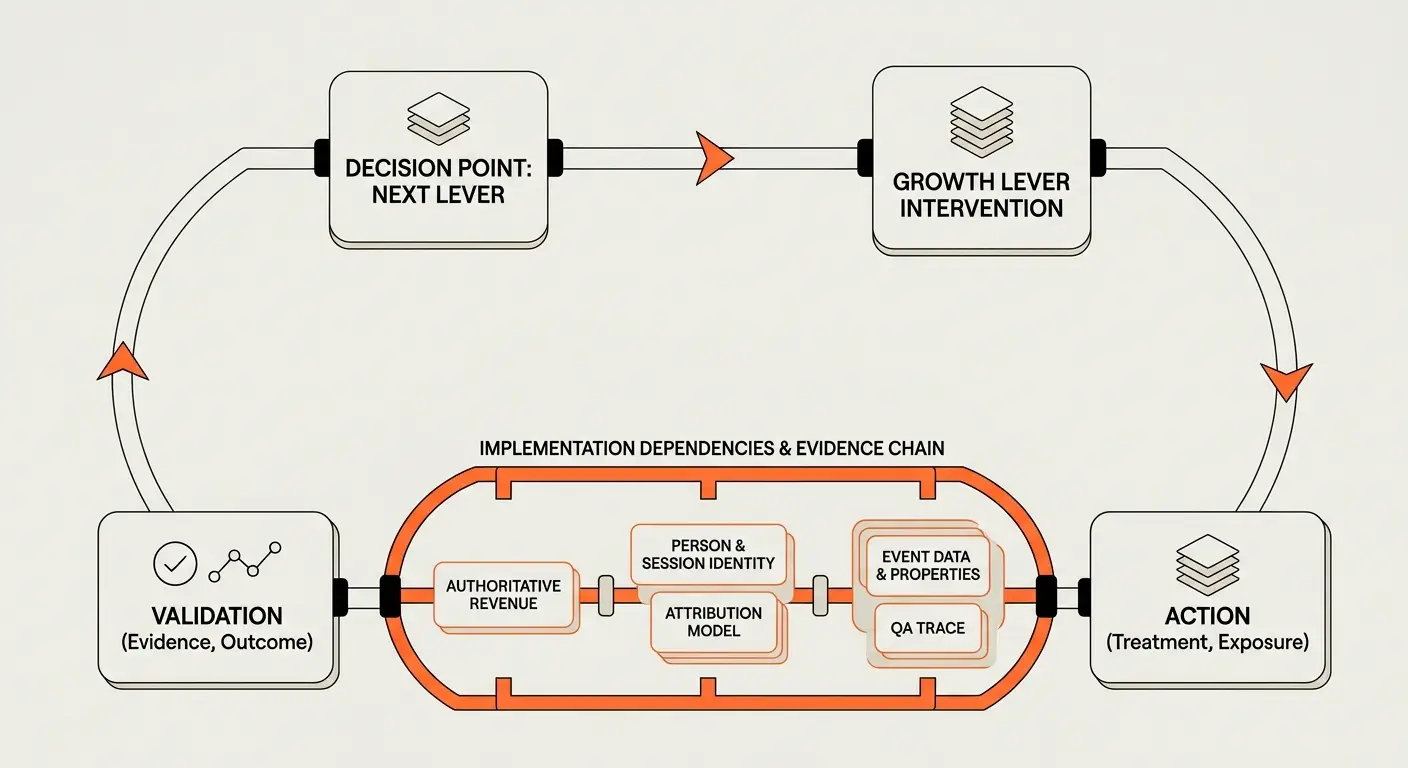
Read moreA useful PostHog implementation is not an SDK installation or feature tour. It is a decision system connecting business-aware events, identity, acquisition, revenue, experiments, and QA so a growth team can identify a lever, act on it, and validate the result.
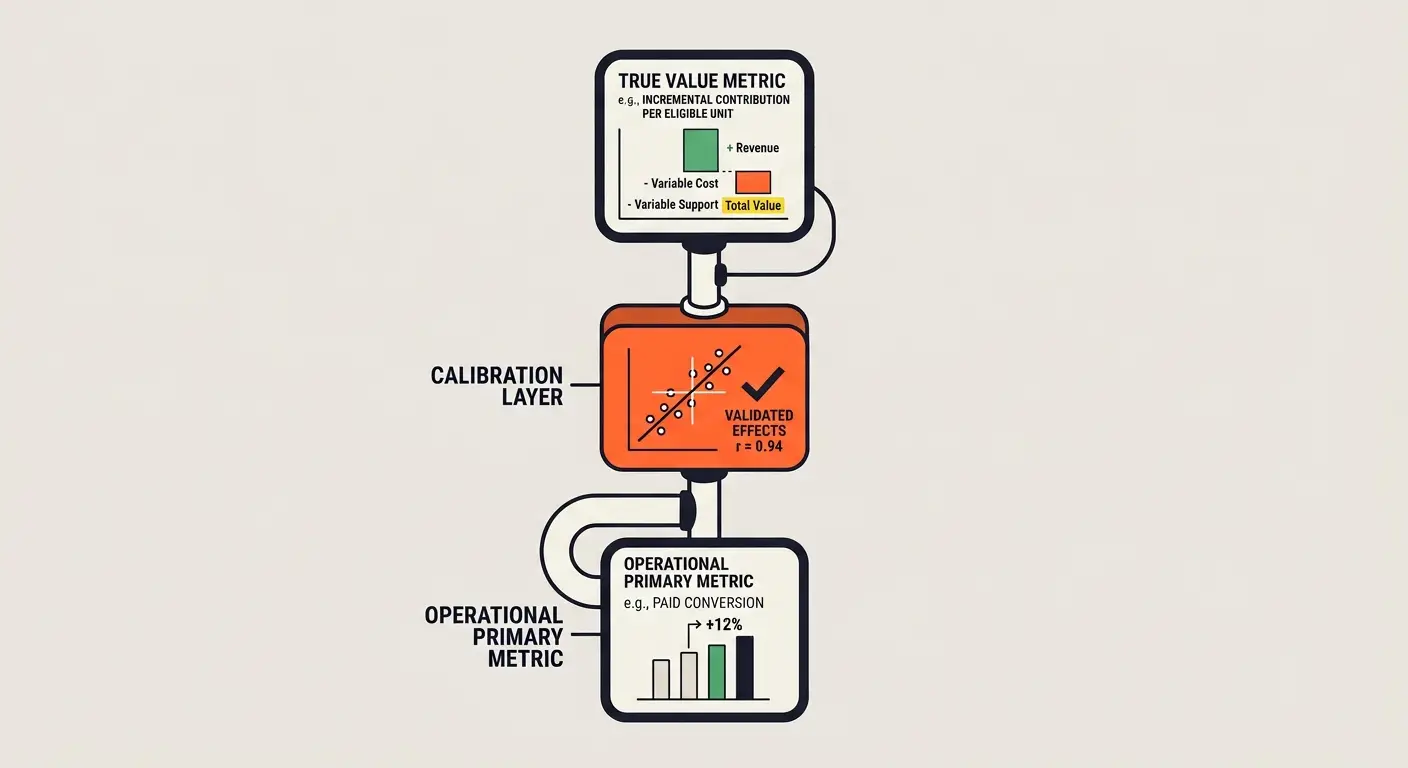
Read moreThe best A/B testing metric is usually the measurable outcome closest to incremental contribution per eligible visitor, user, or account. This guide separates true decision metrics, operational primaries, leading indicators, guardrails, and diagnostics—then maps ecommerce, subscription, pricing, lead-generation, marketplace, and cost-changing experiments to the metrics that should actually determine the winner.
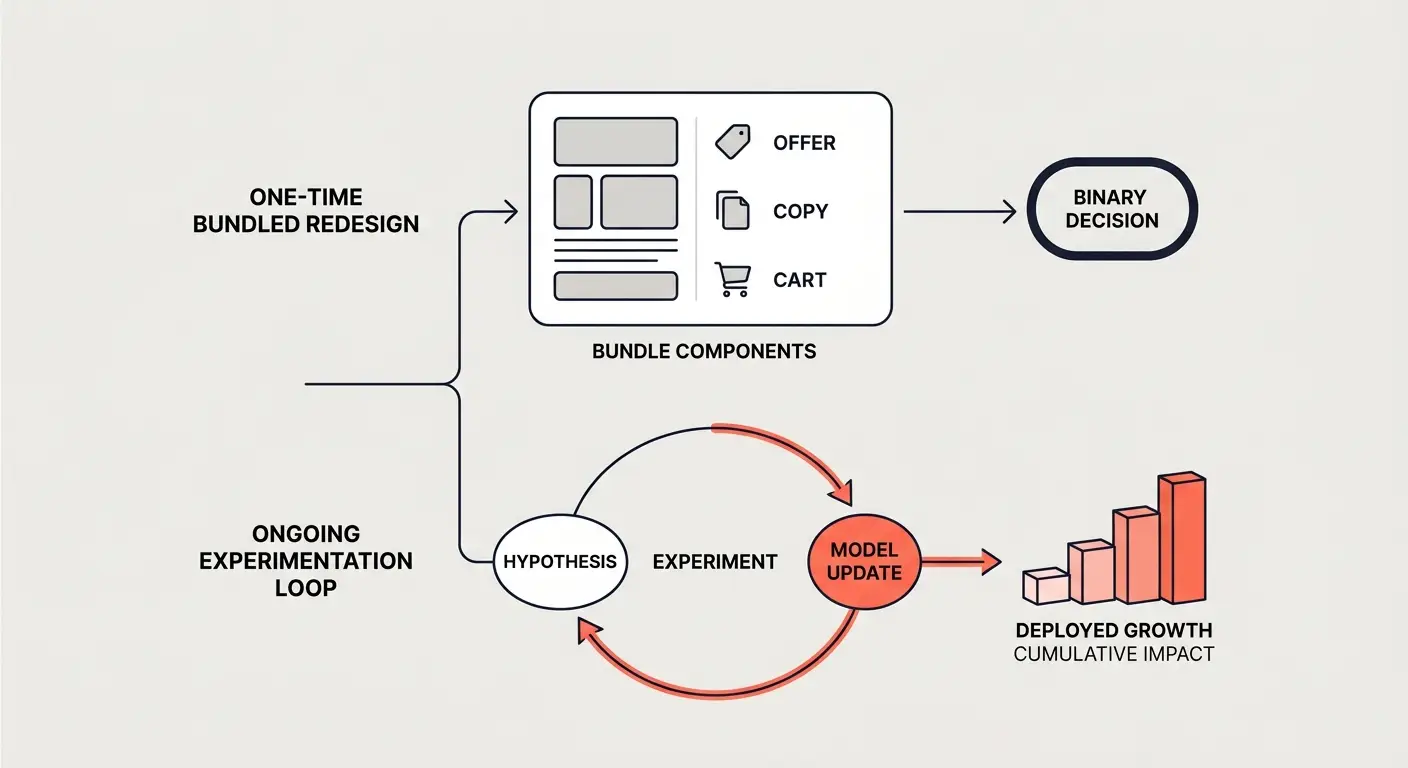
Read moreA tested one-time redesign can be rational when the current experience needs a structural reset. Ongoing A/B testing creates more long-term value when each experiment produces both deployed impact and reusable customer learning. This framework shows how to choose—and why one hypothesis does not mean changing only one UI element.
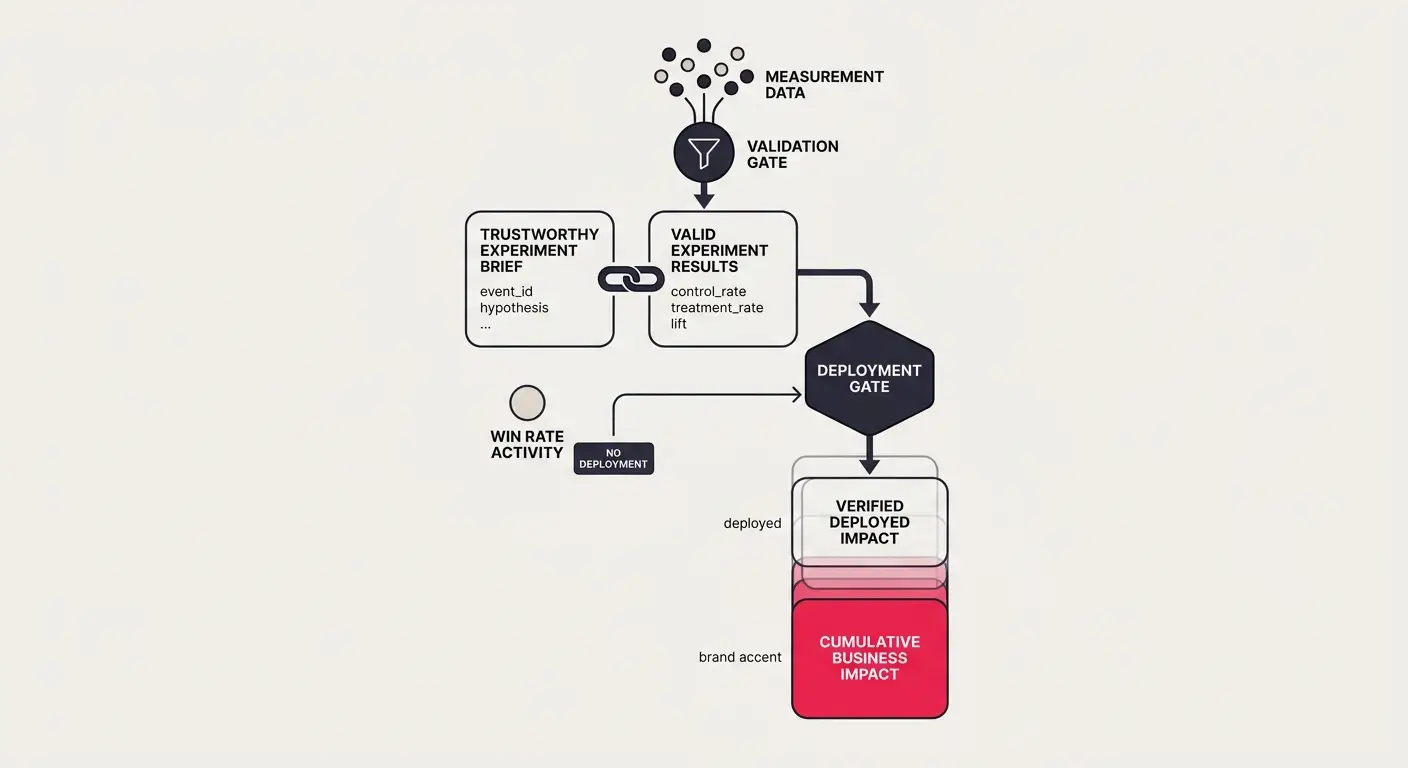
Read moreA CRO agency should be judged by the complete evidence chain it creates: trustworthy measurement, explicit hypotheses, valid experiments, verified deployments, and cumulative improvement to a meaningful business outcome. Win rate, test count, and isolated uplift are useful diagnostics, but they do not prove realized business value.
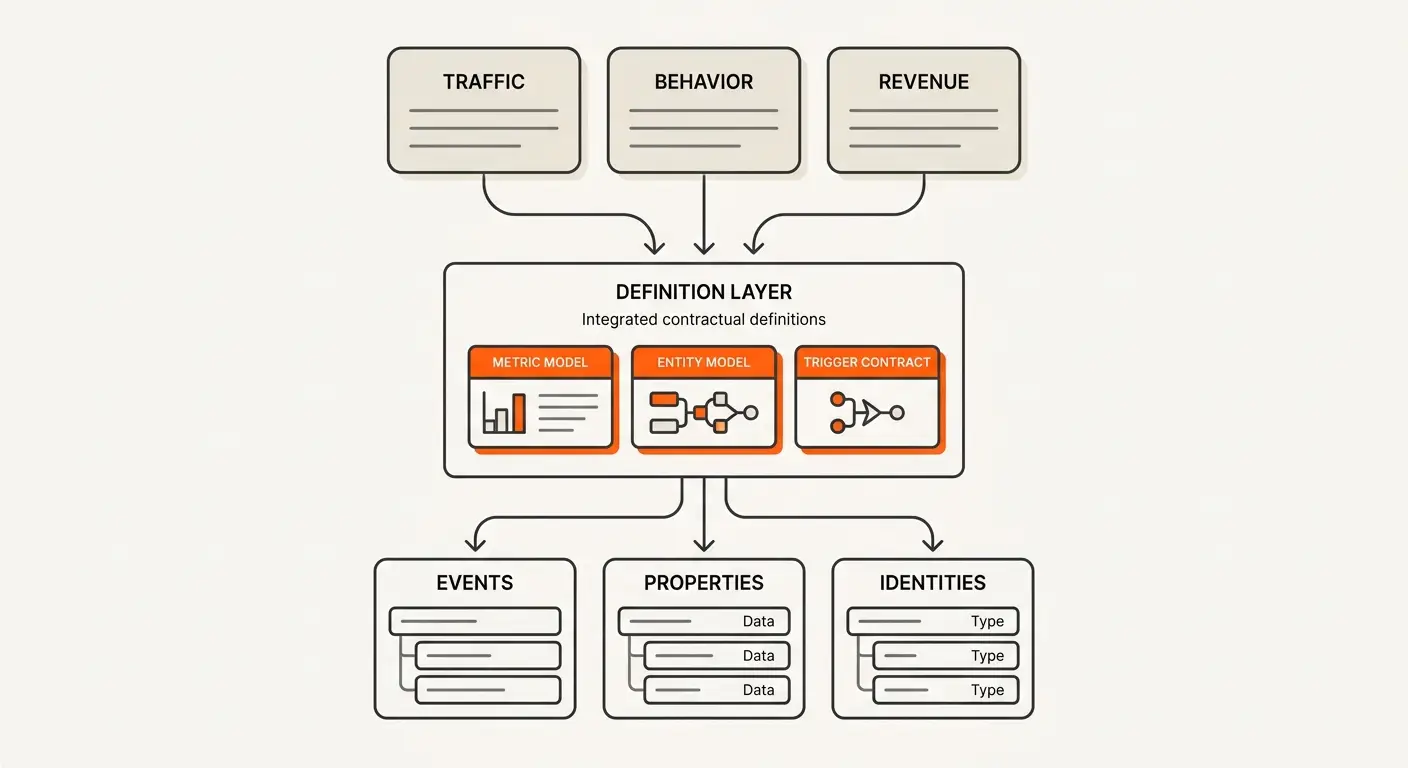
Read moreAn event tracking plan is not an event-name spreadsheet. It is the contract that defines how business questions become entities, events, trigger rules, properties, identities, revenue facts, metrics, QA, and governed analytics data. This guide includes a complete paid-subscription example and downloadable Excel template.
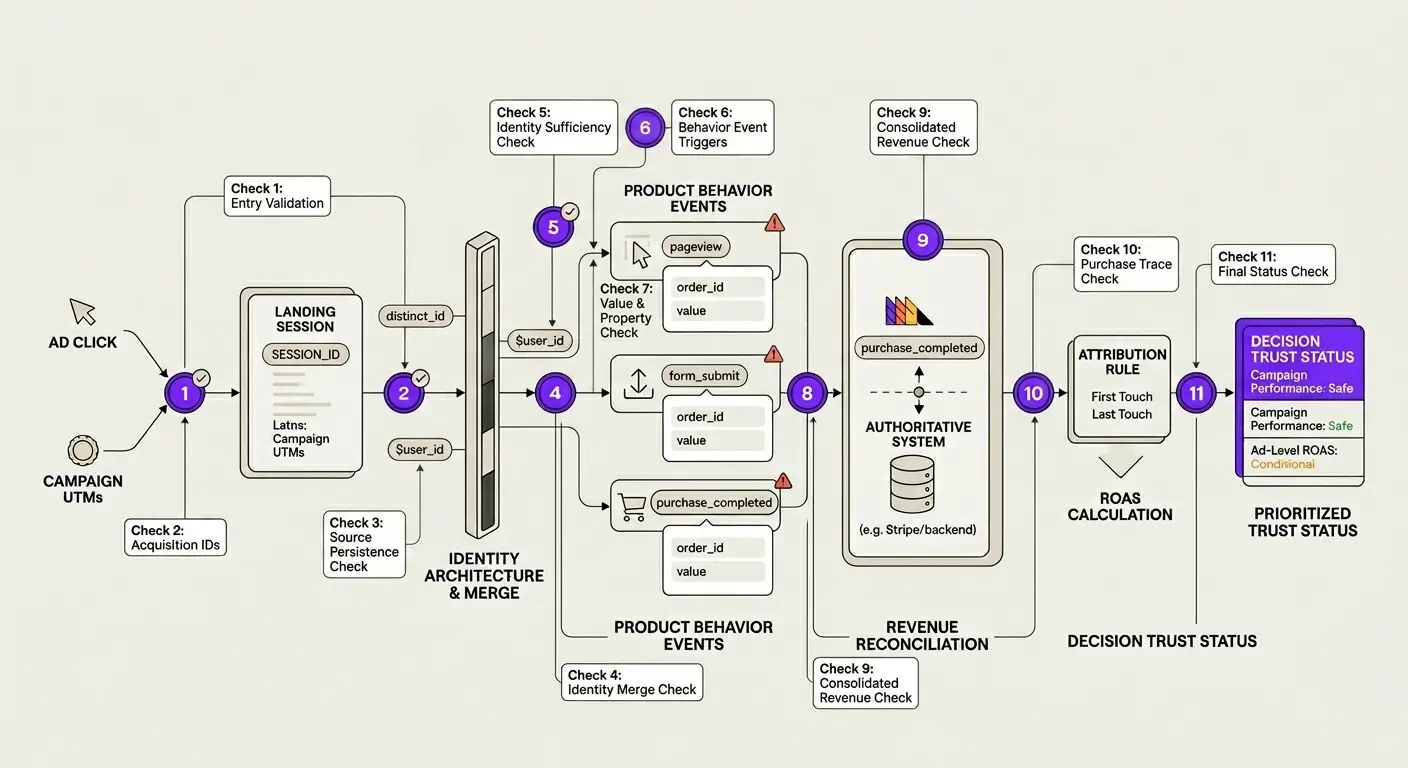
Read moreA PostHog audit should prove more than event delivery. These 12 checks follow the full measurement chain—from ad click and identity through event semantics, purchase value, attribution, ROAS, and production governance—so you know which decisions the data can safely support.
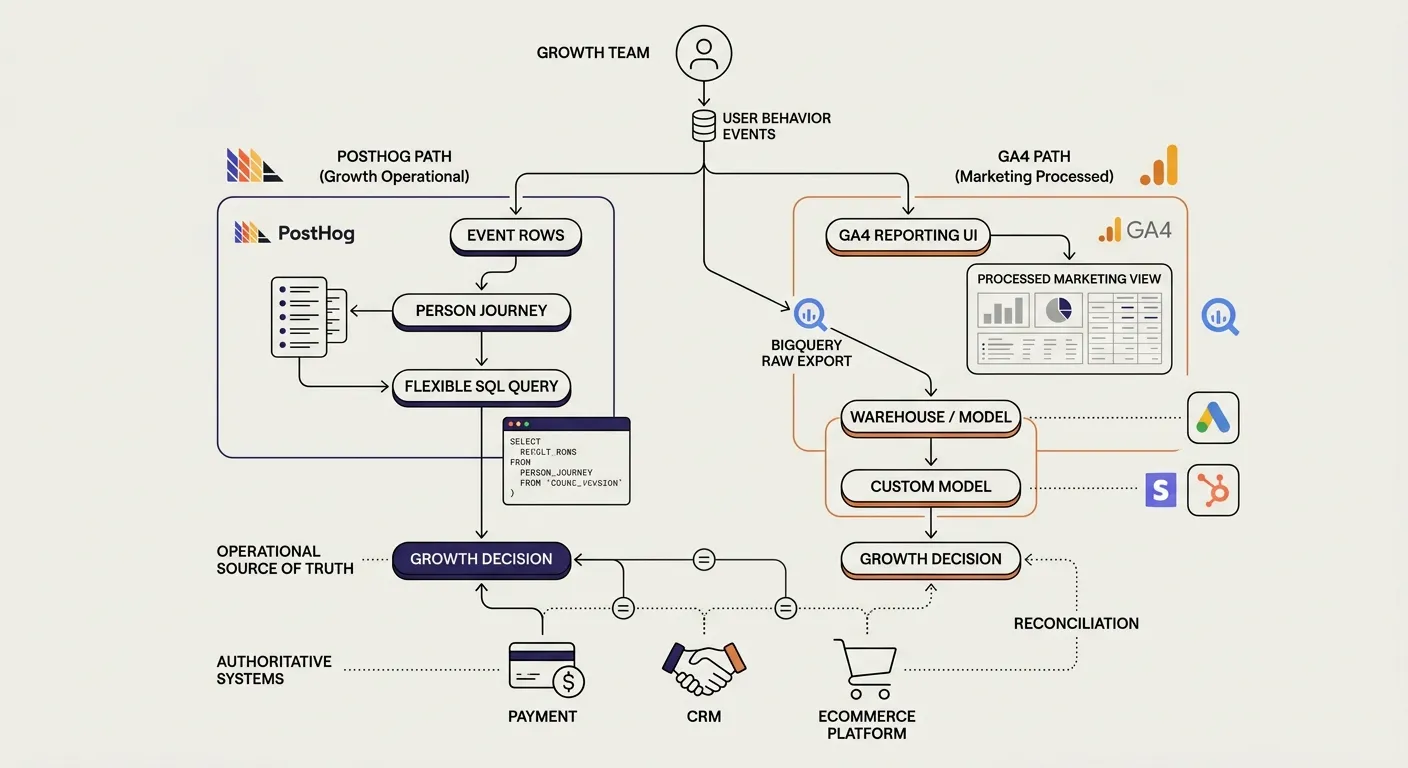
Read morePostHog is usually better suited than the GA4 reporting interface to be the operational source of truth for growth decisions. It provides direct event-level investigation, explicit identity, flexible SQL, behavioral analysis, and experimentation in one environment. GA4 remains valuable for standardized acquisition and Google Ads reporting; when raw GA4 data is modeled in BigQuery, the warehouse becomes the real source of truth.
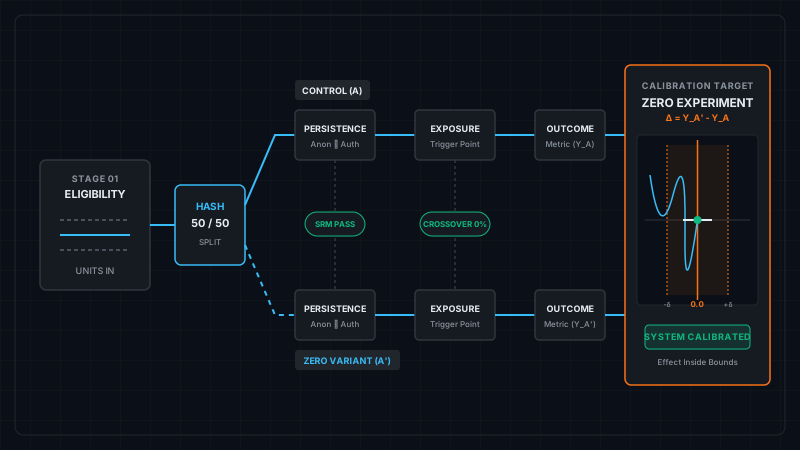
Read moreAn A/B result is only as trustworthy as the system that produced it. This audit framework examines eligibility, assignment, bucketing, identity persistence, exposure, sample-ratio mismatch, metric definitions, conversion windows, and statistical analysis. It also introduces the Zero Experiment: a production A/A calibration test designed to reveal whether the system creates lift where no treatment exists.
Read moreA conversion tracking audit should prove more than whether a tag fires. It should verify event meaning, duplicates, identity, cross-domain continuity, attribution, consent behavior, and reconciliation with orders, payments, CRM records, and advertising platforms. This framework shows what to inspect before funnel data is used for optimization.
Read more